
NFPA Standards
We perform all inspections in strict accordance with NFPA 10, the national standard for portable fire extinguishers. This ensures your equipment is tested, maintained, and recharged at the precise intervals required by code to remain functional during an emergency.
ICC Compliance
Navigating fire codes is simplified through our alignment with International Code Council regulations. We ensure your facility meets all safety requirements, from proper extinguisher placement to occupancy-specific mandates.
NAFED Standards
We adhere to NAFED’s rigorous benchmarks to ensure our technicians provide the highest level of fire equipment expertise. Our commitment to these industry-leading practices guarantees your equipment is handled by certified professionals.
Building Reports
BuildingReports.com leverages innovative technology and on-demand reporting tools to dramatically improve the building safety inspection process, leading to lower inspection cost and significantly reduced compliance risk.https://www.buildingreports.com/m/

Inspections At A Glance
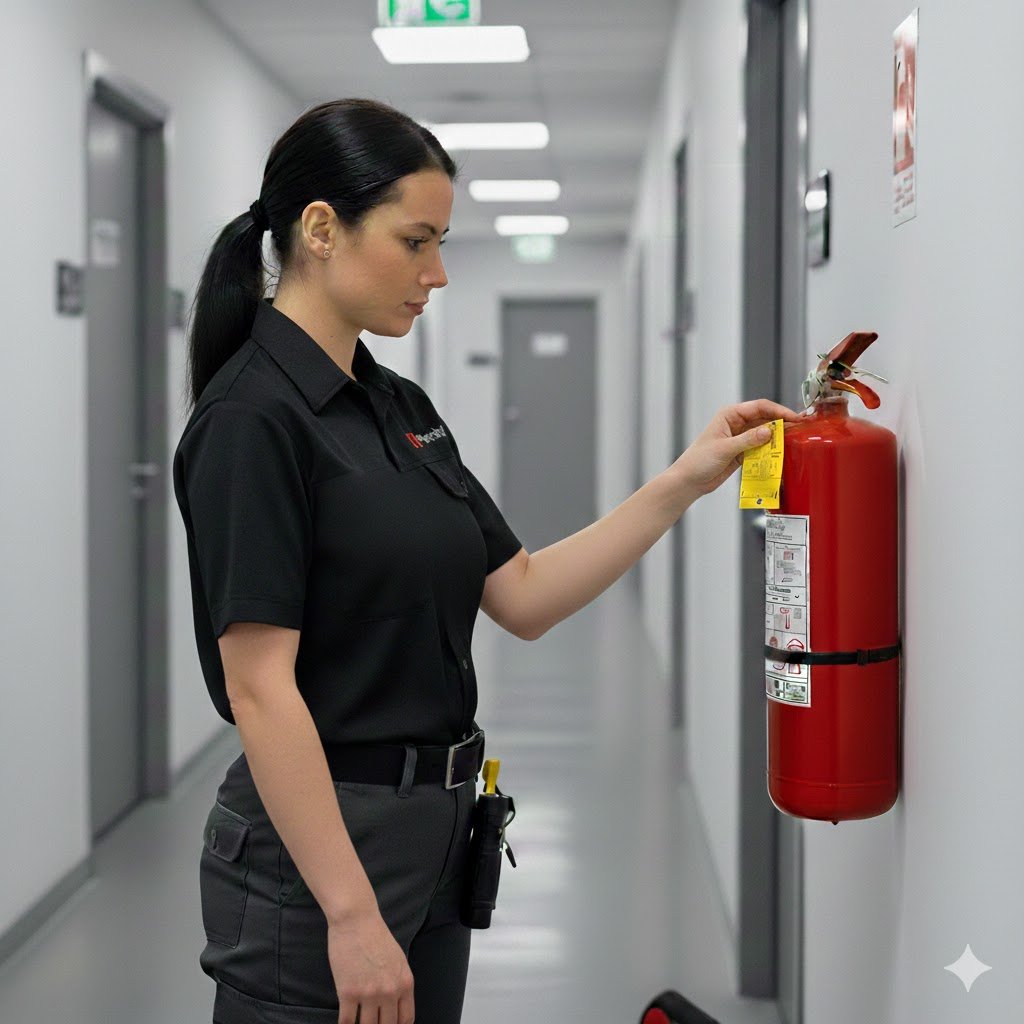
12 Point fire extinguisher inspection
VISUAL EXAMINATION: performed on the entire unit, carefully inspecting for dents, rust, corrosion, pitting or other shell damage.
TEST/MAINTENANCE HISTORY: reviewed to determine the need for required internal maintenance or hydrostatic testing.
PRESSURE GAUGE: checked to insure that the unit is fully pressurized.
WEIGHT: the extinguisher is checked to insure the correct amount of extinguishing agent is in the cylinder.
DISCHARGE HOSE: inspected for signs of blockage or damage.
Pull Pin: removed to insure that the pin is easily removed in the event of an actual fire emergency.
HANDLE/LEVER: checked for smooth discharge operation.
CLEAN EXTINGUISHER: making sure the extinguisher is free of debris.
INSPECTION CERTIFICATION: documented by attaching a year dated tamper seal and service tag indicating the work performed.
EXTINGUISHER: returned to the proper location.
MOUNTING BRACKET: checked to insure extinguisher is installed securely on correct mounting hook or bracket.
HAZARD APPLICATION: reviewed to make sure that the fire extinguisher is the correct type for a potential fire hazard.
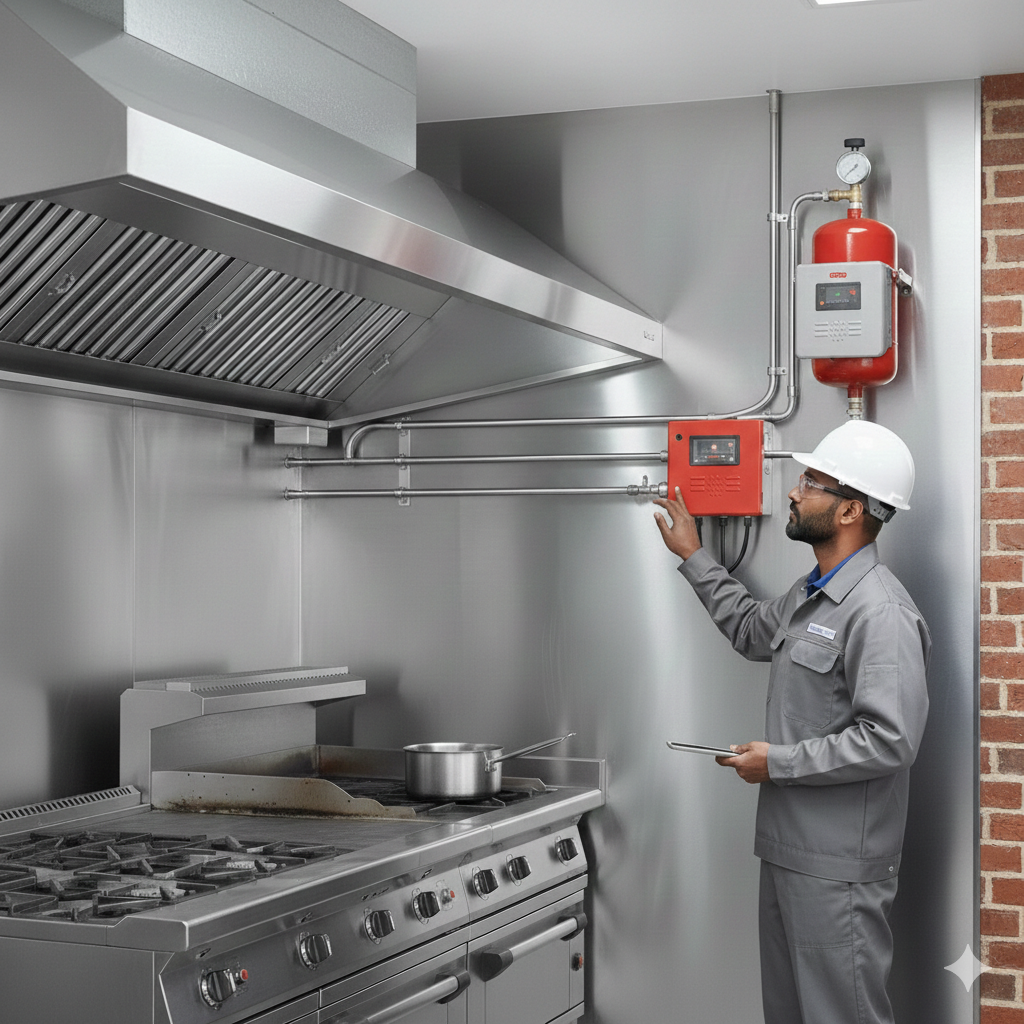
Semi annual Inspection of Pre Engineered Systems
A professional kitchen suppression inspection is a systematic evaluation designed to ensure life safety and regulatory compliance. Our technicians perform the following critical tasks:
Component Assessment: Verify the integrity and functionality of nozzles, piping, and control panels.
Trigger Testing: Conduct operational tests on manual pull stations and automatic detection devices.
Nozzle Alignment: Ensure precise positioning of discharge nozzles relative to cooking appliances.
Compliance Maintenance: Replace fusible links with components matching the required temperature ratings.
System Compatibility: Evaluate the system’s configuration against current equipment and hood layouts.
Pressure & Agent Verification: Inspect agent tank levels and pressure gauges for optimal readiness.
NFPA 17,17A,96 Certification: Execute a full functional test in strict accordance with NFPA standards.
This process ensures your fire suppression system is fully operational and prepared to mitigate risks during an emergency.

During routine inspections, our technicians commonly identify the following operational and compliance-related issues:
Hazardous Accumulation: Excessive grease buildup on discharge nozzles or within ductwork.
Incorrect Nozzle Application: Use of nozzles that are improperly rated for the specific appliances they are intended to protect.
Component Expiration: Presence of outdated or improperly rated fusible links.
Pressure & Agent Integrity: Depleted agent pressure or expired chemical suppressants.
Regulatory Non-Compliance: Outdated system configurations that no longer meet current fire codes.
Addressing these deficiencies is critical. Left unresolved, they can impair system performance leading to municipal code violations and jeopardize insurance eligibility.
Professional Fire Safety & Extinguisher Training
Across the United States, fire departments respond to a workplace fire every 50 seconds. Recent data indicates that approximately 37,000 fires occur at industrial and manufacturing properties annually, with an additional 16,500 fires in office and retail environments. These incidents result in over $2.3 billion in direct property damage and hundreds of preventable injuries each year.
To mitigate this risk, OSHA 29 CFR 1910.157 mandates that employers not only provide accessible fire protection equipment but also ensure employees are trained in its safe and effective use. ABC Fire Equipment provides the hands-on education necessary to protect your staff, your facility, and your bottom line.
Comprehensive Onsite Instruction
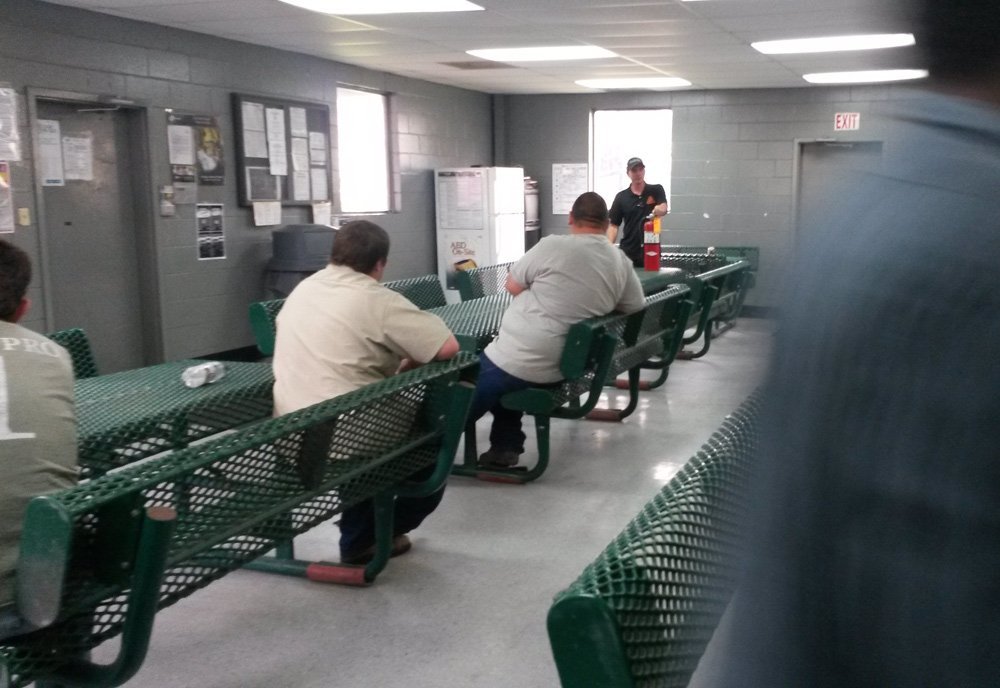
We provide professional, expert-led training conducted directly at your facility to minimize downtime. Our curriculum is designed to transform your staff into a capable first-response team, covering:
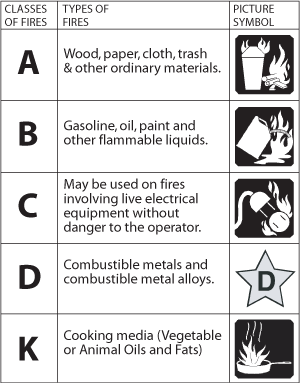
Identification & Classifications: Understanding the specific types of fire extinguishers and which fire classes (A, B, C, D, or K) they are designed to suppress.
Strategic Response: Learning the proper location, mounting requirements, and safe handling of portable units to prevent injury during an emergency.
The P.A.S.S. Method: Mastery of basic firefighting skills and the mechanical operation of portable extinguishers.
Tailored Training Modules
We offer flexible training packages that can be customized to fit your facility’s specific hazards:
Classroom Instruction: A deep dive into fire theory, hazard identification, and safety protocols.
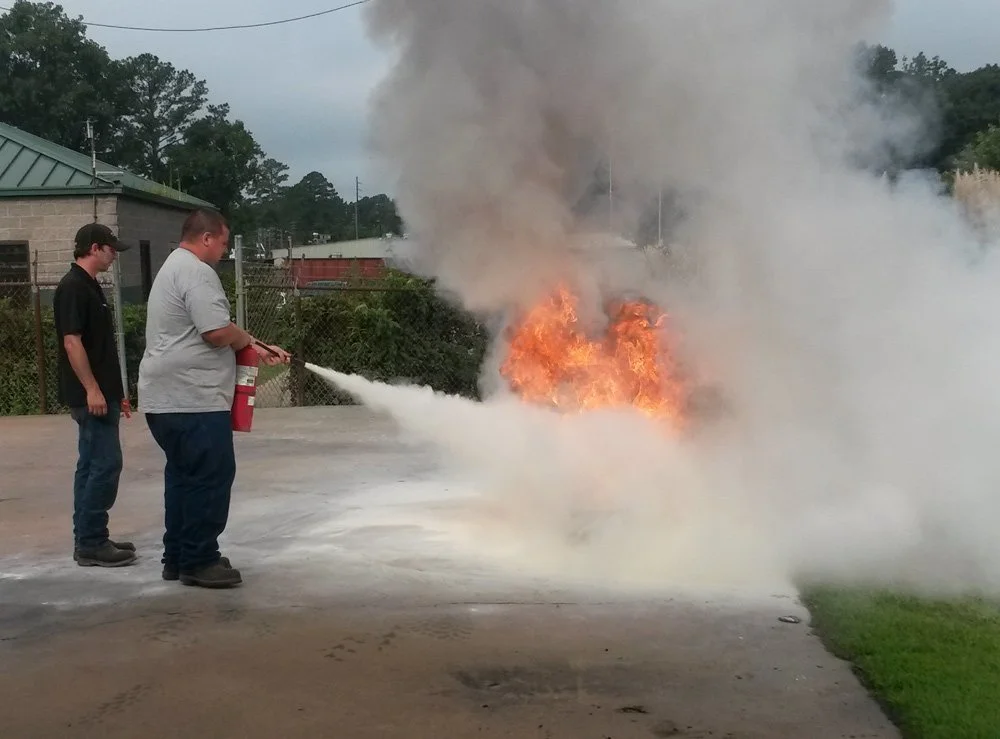
Live-Fire Simulations: Hands-on "live burn" sessions where employees gain real-world experience extinguishing a controlled fire.
Certification: Upon successful completion, all participants are awarded Certificates of Training to satisfy your company's safety records, insurance requirements, and OSHA 1910.157(g) mandates.